
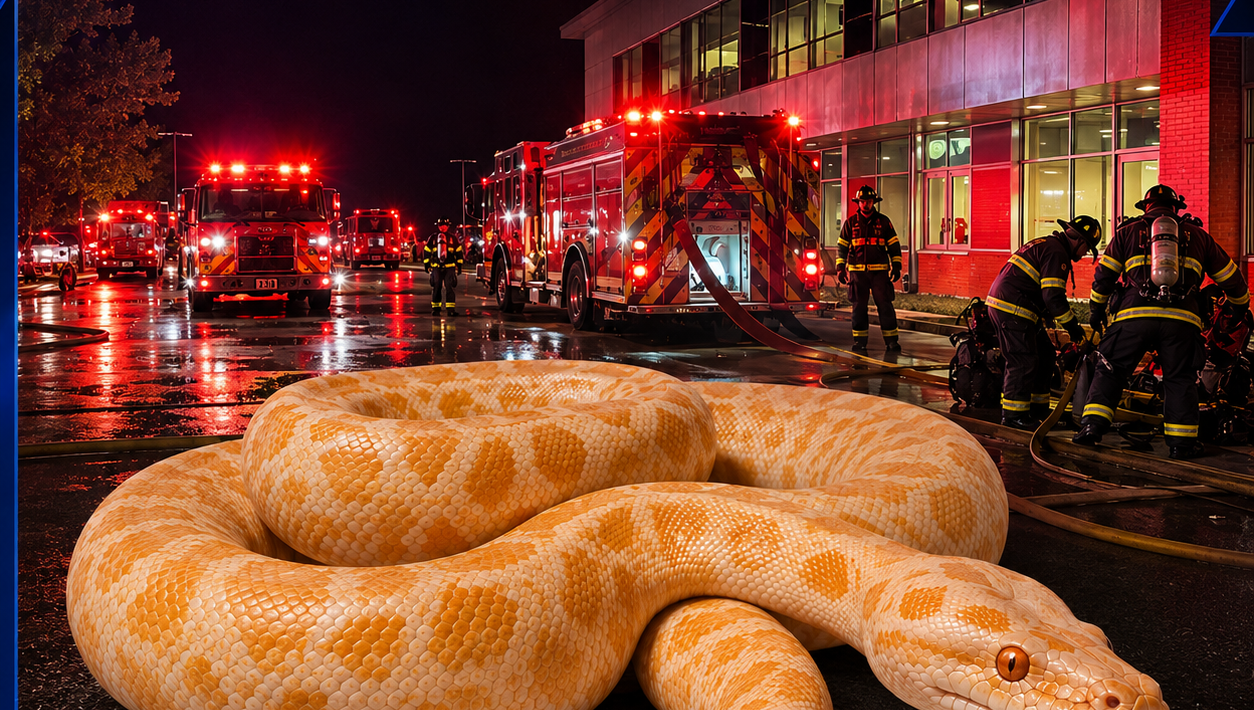
An unusual overnight fire at Forest Middle School damaged eight classrooms and killed a longtime classroom tortoise. Investigators blamed an escaped 8-foot python for contributing to the blaze, but the teacher who owns the snake says surveillance footage and what she found inside the classroom tell a different story.
FOREST, Va. — What started as an overnight fire at a Bedford County middle school quickly turned into one of the more unusual local news stories of the summer after firefighters encountered an approximately 8-foot python while working inside the smoke-filled building.
The fire happened during the early morning hours of Thursday, August 13, at Forest Middle School in Bedford County. The Bedford County 911 Communications Center received a fire alarm from the school at approximately 12:31 a.m., and firefighters arrived about 14 minutes later. Crews found the sprinkler system activated, water coming from the second floor and visible smoke and fire from the upper portion of the school. The call was upgraded to a structure fire, bringing several departments and agencies to the scene.
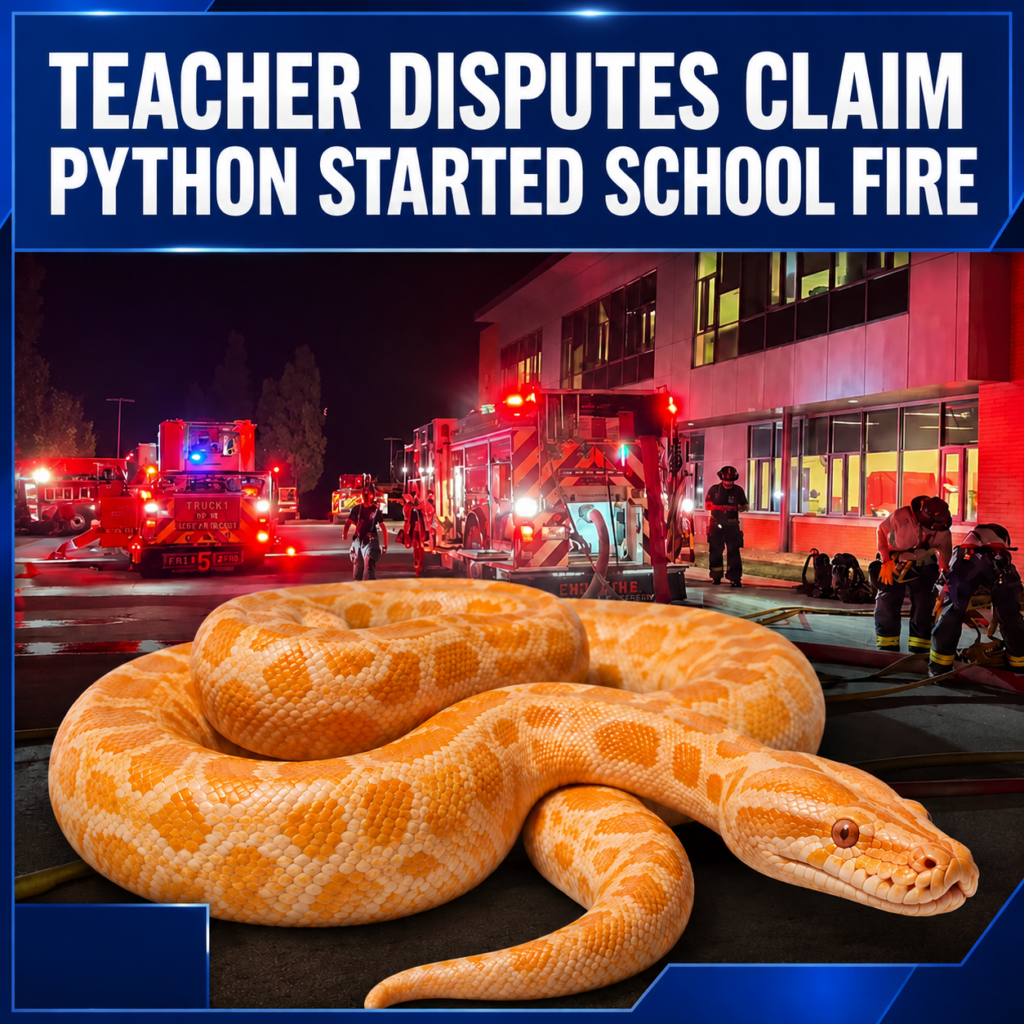
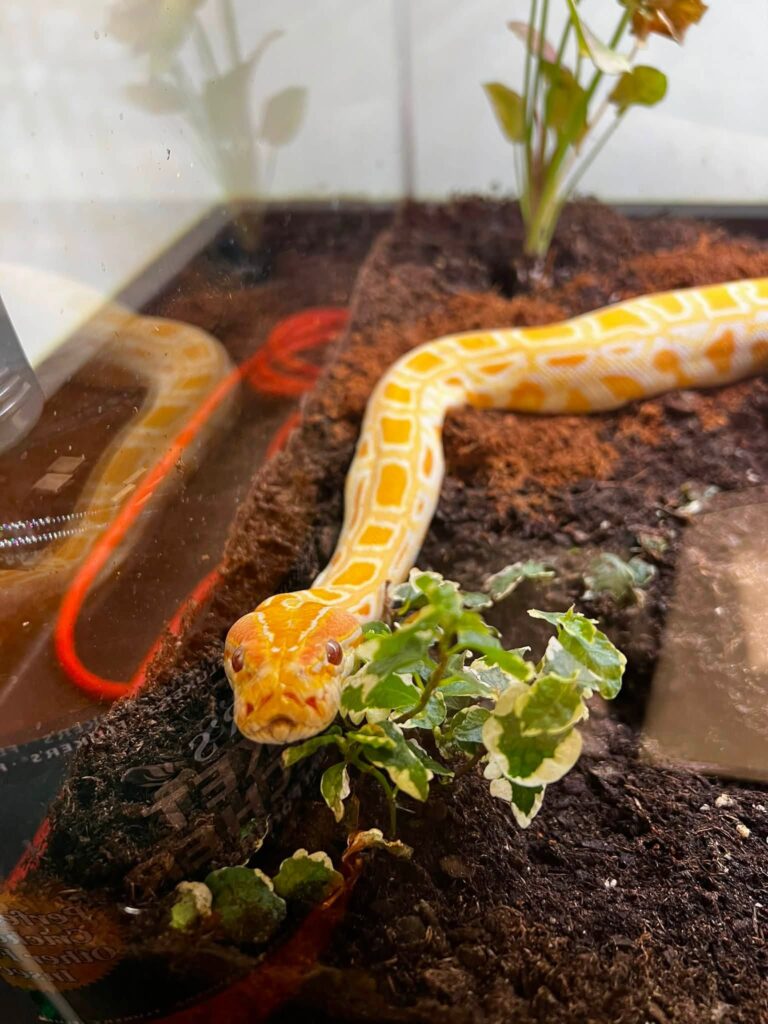
As firefighters worked their way through the building and reached the classroom where the fire was burning, they encountered something few firefighters probably expect to see during a school fire: a large python named Nanner. Crews were able to secure the snake in a temporary holding area while the fire was extinguished and the building was checked for remaining hot spots. No people were injured.
The fire nevertheless caused significant damage. Eight classrooms were affected by fire, smoke or water, creating a major cleanup project just before the beginning of the school year. Forest Middle School is located at 100 Ashwood Drive in Forest and serves students in Bedford County.
At first, the strange discovery of a large snake inside a burning middle school was simply an interesting detail in an otherwise serious structure fire. That changed when the investigation into the cause of the blaze was completed.
Investigators Say the Python Contributed to the Fire
The Bedford County Fire Marshal’s Office determined that the fire was accidental and concluded that Nanner had escaped from her enclosure and disturbed or knocked over a heat source, which then started the fire. That explanation quickly became the headline attached to the incident: an 8-foot python had escaped from its cage and accidentally started a school fire.
Bedford County Chief Fire Marshal Steven Whipple later told reporters that the snake contributed to starting the fire, while also making it clear that investigators obviously were not suggesting the animal had intentionally caused it. The unusual explanation was soon picked up by media outlets well outside the Roanoke Valley, and Nanner became the unlikely centerpiece of a national story.
There was just one significant problem with that version of events: Nanner’s owner says it isn’t what happened.
Forest Middle School life science teacher Brittany Jacobs, who has spent years keeping and working with reptiles, later published a lengthy statement explaining why she believes the snake was trying to escape an already-burning classroom rather than causing the fire in the first place.
Jacobs is listed by Forest Middle School as a life science teacher. In describing her background, she said this is her 18th year teaching and that she originally studied biology on a pre-veterinary track with an interest in herpetology. Animals eventually became a major part of the way she taught science.
Her classroom was not a typical room with a few posters and a fish tank in the corner. Over the years, Jacobs said she has kept snakes, turtles, tortoises, frogs, fish, axolotls and other animals that were incorporated directly into lessons about genetics, reproduction, ecosystems, adaptations and animal behavior. She described using python color morphs when discussing genetics and bioactive enclosures when teaching students about the roles different organisms play within an ecosystem.
Jacobs also said the animals became important to some students in ways that went beyond science. Children who were upset or having a difficult day would sometimes visit the classroom, look at the animals or spend time quietly around them before returning to class. She had even begun pursuing a grant for a large floor-to-ceiling bioactive enclosure for Nanner that would have included plants, aquatic life and other organisms.
After the fire, however, Jacobs found herself not only dealing with the loss of her classroom but also watching one of her animals become widely blamed for causing the disaster.
Teacher Says Nanner Was Locked Inside When She Left
Jacobs said all of the snake enclosures in her classroom were closed and secured when she left the school Wednesday afternoon. She also disputed the common description of the equipment involved as simply a loose “heat lamp.”
According to Jacobs, the heat source associated with her tortoise enclosure was a heat emitter that was secured to the side of the enclosure. She said it had been positioned in essentially the same place for approximately three years and was mounted above the bedding rather than sitting loosely where it could easily fall.
She also pointed to an earlier inspection of her classroom. Jacobs said two members of the Bedford Fire Marshal’s Office, the head of the school’s janitorial staff and Jacobs herself went through the room in November 2025, checking plugs, cords and fixtures. According to her account, one cord was identified as not meeting requirements and was immediately removed and replaced. She said the rest of the room passed that inspection.
That previous inspection does not establish what caused a fire months later, and equipment can fail even when it has previously been installed correctly. But Jacobs says it is one of several reasons she disagrees with the suggestion that a poorly secured heat fixture was simply knocked to the floor by a snake.
What she says she found when she returned to the damaged classroom raised even more questions for her.
Jacobs arrived at the school at approximately 4 a.m. and examined Nanner’s enclosure. The enclosure had been secured by two metal locks designed to prevent the screen lid from being lifted. She said both locks had been forced off. One was found in a sink and another between the wall and the enclosure, and she said the metal had been stretched enough that the locks no longer fit properly afterward.
Her belief is that the snake repeatedly pushed upward against the screen as heat and smoke increased inside the classroom until it was eventually able to force its way out. Jacobs said that in 18 years of keeping reptiles she had never before had a snake escape from an enclosure equipped with a locking system.
The condition of the snake itself also stood out to her. Jacobs said Nanner had soot on her face in a pattern that appeared to correspond with the holes in the enclosure screen. After the soot was cleaned away, she said the snake’s nose appeared purple and bruised, which Jacobs believes came from repeatedly pushing against the screen while trying to get out.
Those observations alone cannot determine the cause of the fire. The most important part of Jacobs’ argument involves something else: the school’s hallway surveillance cameras.
The Surveillance Video Raises the Biggest Question
According to Jacobs, school surveillance footage was reviewed after the incident in part to make sure nobody had entered her classroom during the period before the fire.
She says that footage showed fire already visible through the glass of the classroom door approximately 20 minutes before Nanner was seen leaving the classroom.
That timing is critical because the two versions of the incident depend largely on which event happened first.
The official explanation is that Nanner escaped the enclosure, disturbed a heat source and contributed to starting the fire. Jacobs’ explanation is almost exactly the reverse: she believes a fire started while Nanner was still locked inside the room, the classroom became dangerously hot, and the snake eventually forced its way out of the enclosure to escape.
Jacobs’ description of the surveillance footage has also been reported by national media covering the disagreement between her and investigators.
Roanoke Voice has not independently viewed the surveillance video or the complete fire investigation file. The Bedford County Fire Marshal’s conclusion remains the official determination of the cause. Jacobs’ description of what she saw and found in the classroom represents her account of the incident and her reason for disputing that finding.
She also offered an explanation for why a python might behave the way Nanner apparently did. Pythons possess heat-sensitive facial pits that allow them to detect infrared radiation in their surroundings. Jacobs believes increasing heat inside the classroom triggered the animal’s instinct to move away from the hotter portion of the room. She said conditions became intense enough that another enclosure near Nanner’s had melted.
When firefighters entered, Jacobs says Nanner was ultimately pushed farther into the classroom by water from the fire hose before being secured. She also said the snake’s original enclosure was located away from the doorway, which is another reason she believes Nanner moved toward the door while attempting to escape the heat rather than simply roaming the classroom before the fire began.
A Tortoise Named Bowser Did Not Survive
The python became the headline, but one of the saddest parts of the fire received considerably less attention.
A tortoise named Bowser died in the blaze.
Jacobs said she had owned Bowser for more than eight years, beginning when he was approximately the size of a golf ball. By the time of the fire, she said he had grown to roughly the size of a basketball. His enclosure was in the area affected by the fire, and Jacobs described finding his remains afterward.
For Jacobs, the fire meant much more than the physical loss of a classroom. She said she lost teaching materials accumulated over the course of an 18-year career and eventually removed all of the surviving animals from the school. They were taken home with her and monitored for possible respiratory problems following their exposure to smoke. She said veterinary care, including oxygen treatment and antibiotics if necessary, was available if any of the animals developed complications.
Her public statement also reflected a complicated mix of grief, frustration and guilt. Jacobs made clear that she did not want to point fingers or accuse anyone of deliberately doing something wrong. She expressed concern about the expense of repairing the school and disappointment that students may no longer have access to the same hands-on experiences with animals that previous classes had enjoyed.
That part of the story became somewhat lost once the idea of a “python starting a school fire” began circulating online. It was a strange and easy headline to share, but the consequences inside Forest Middle School were very real: damaged classrooms, destroyed teaching materials, displaced classes and the death of an animal that had been part of the classroom for years.
What Happened First Remains the Key Issue
Despite the disagreement, there are several facts that both versions of the story largely share. A fire broke out in Jacobs’ classroom during the early morning hours of August 13. Nanner eventually escaped her enclosure. Firefighters encountered and secured the approximately 8-foot python while fighting the fire. Eight classrooms were affected, no people were injured, and Bowser the tortoise died.
The disagreement is over the sequence.
Investigators determined that the snake escaped and contributed to starting the fire by disturbing a heat source. Jacobs says Nanner was still inside a locked enclosure after the fire had already begun and only escaped when conditions in the room became dangerous.
Her description of the surveillance footage is probably the most significant point she has raised publicly. If the video shows flames visible for roughly 20 minutes before the python exits the classroom, it is understandable why she believes the popular version of the story is incomplete. At the same time, a fire investigation considers evidence beyond a single hallway camera, and Roanoke Voice has not reviewed the complete evidence used by the Fire Marshal’s Office to reach its conclusion.
For now, the official finding has not changed: Bedford County investigators ruled the fire accidental and said the escaped python contributed to its cause.
But the teacher who knew the room, maintained the enclosures and returned to see the aftermath says she believes the snake that became famous for supposedly starting the fire was actually another victim of it.
What began as a strange local emergency has therefore become a much more interesting question than the viral headline suggested. The issue is no longer simply whether firefighters found an 8-foot python inside a burning school. Everyone agrees that they did.
The question is why the python was out of its enclosure in the first place.
And at least for now, the fire investigators and Nanner’s owner have very different answers.
Roanoke Voice will continue following the Forest Middle School fire and will update this story if additional investigative records, surveillance footage or other information about the cause becomes publicly available.