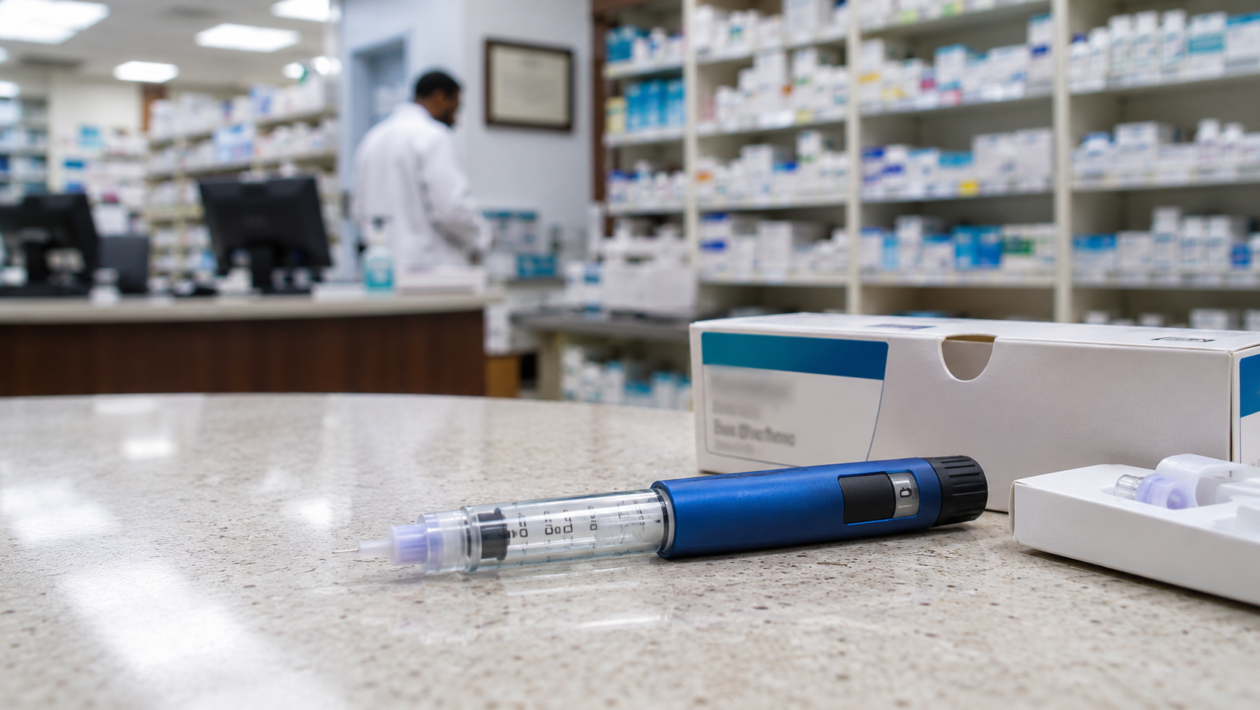
A Roanoke-area pharmacy experience raised questions after a roughly $35–$40 monthly insulin prescription was replaced with Rezvoglar — with a quoted price as high as $150 to $196. We investigated what is happening.
ROANOKE, VA — If you use Lantus SoloStar insulin and your pharmacy suddenly tells you it is unavailable, you are not alone.
Patients around the country have reported difficulty finding Lantus SoloStar insulin pens, and our research confirms there is a legitimate supply problem affecting the popular long-acting insulin.
But another issue is emerging alongside the shortage: patients who normally obtain Lantus for around $35 per month through manufacturer or prescription-discount programs may suddenly be quoted dramatically higher prices when pharmacies substitute another insulin glargine product.
That is exactly what prompted us to start looking into the situation.
A Roanoke-area Kroger customer reports normally paying approximately $35 to $40 for a month’s supply of Lantus without insurance using a prescription discount program.
When Lantus was unavailable, the pharmacy substituted Rezvoglar, another insulin glargine product. The price quoted for approximately the same supply jumped to between $150 and $196.
So what is happening?
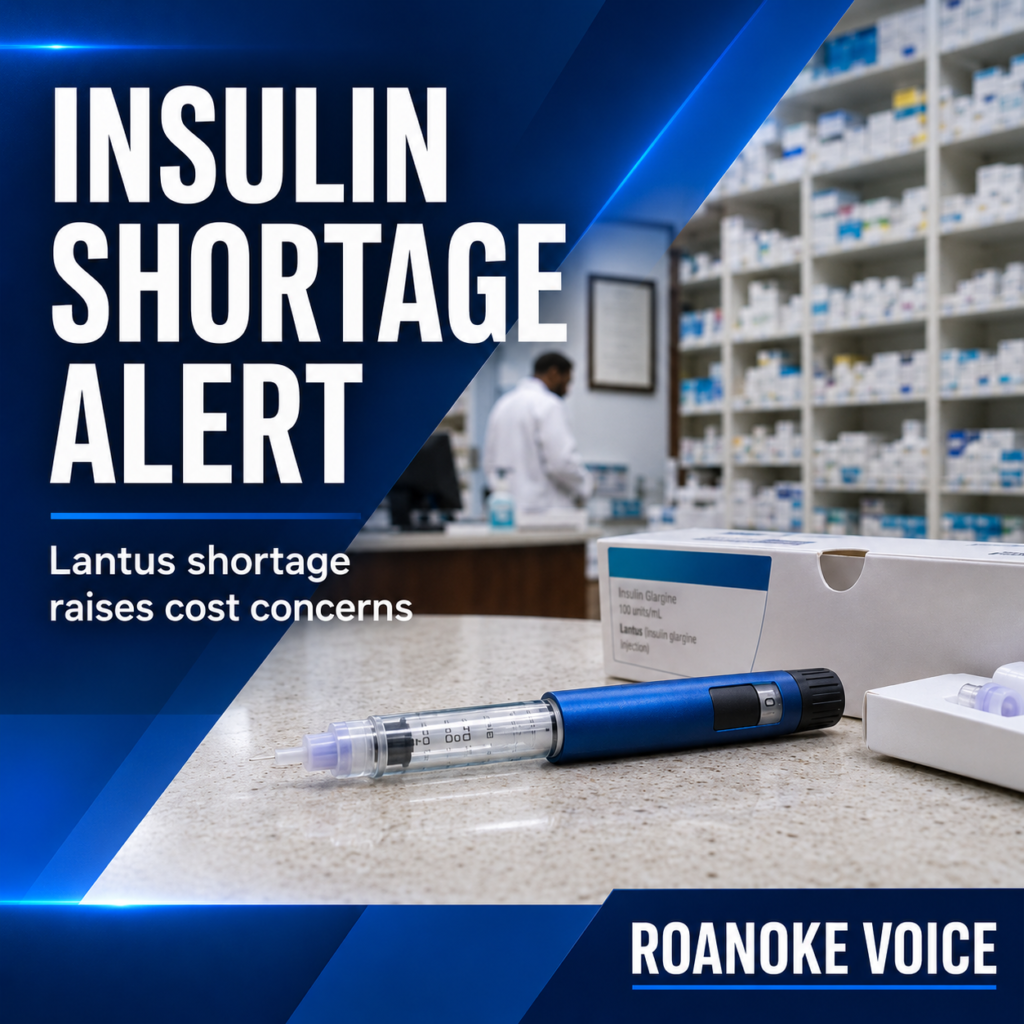
YES — THERE REALLY IS A LANTUS SUPPLY PROBLEM
The American Society of Health-System Pharmacists currently lists insulin glargine injection on its national drug-shortage list.
More specifically, ASHP says Sanofi’s Lantus SoloStar 3 mL pens are in shortage because of increased demand and are currently being placed on intermittent back order. Sanofi is releasing additional inventory as it becomes available.
Sanofi has also publicly confirmed that it is experiencing a period of “intermittent supply” of Lantus SoloStar pens in the United States.
The company attributes the problem to increased demand caused by what it calls “broader market dynamics.” Sanofi says it has accelerated production, expedited replenishment shipments and is managing the allocation of the SoloStar inventory it currently has.
So the shortage is not something invented by an individual pharmacy.
There is an important technical distinction, however.
At least when the shortage was first widely reported in July, Lantus SoloStar had not been designated an official nationwide shortage by the FDA, even though Sanofi acknowledged supply problems and ASHP listed insulin glargine as being in shortage. FDA and ASHP use different monitoring systems and criteria.
In other words, a drug does not have to appear on the FDA shortage list for patients and pharmacies to be experiencing very real supply problems.
WHY IS LANTUS SUDDENLY HARDER TO FIND?
Sanofi has not publicly provided a detailed explanation beyond saying demand increased because of broader changes in the insulin market.
But there have been significant changes.
Biocon discontinued the branded Semglee insulin glargine vials and pens at the end of 2025, although its unbranded insulin glargine-yfgn products remain available.
Lilly is also discontinuing its Basaglar Tempo Pen product during 2026, although regular Basaglar KwikPens remain available.
When patients who previously used competing insulin products are shifted elsewhere in the market, some of that demand can land on Lantus.
Sanofi itself reported that Lantus sales benefited in 2025 from the unavailability of competing medicines, another indication that disruptions elsewhere in the insulin-glargine market have pushed more demand toward Lantus.
That does not prove one specific market change caused the current shortage, but it helps explain what Sanofi may mean by “broader market dynamics.”
THE SHORTAGE APPEARS TO BE MOSTLY ABOUT THE PEN
This is another important detail.
ASHP reports that the affected product is primarily the Lantus SoloStar U-100 prefilled pen.
Lantus U-100 vials remain available, according to the shortage bulletin. Other insulin glargine products — including Rezvoglar KwikPens, Basaglar KwikPens and insulin glargine-yfgn — are also listed as available.
Patients should not change insulin formulations, concentrations or delivery methods on their own. ASHP specifically warns that switching between insulin concentrations or devices can create dosing errors. Any change should be discussed with the pharmacist or prescribing medical provider.
SO WHAT EXACTLY IS REZVOGLAR?
Rezvoglar is not some unrelated insulin being randomly substituted for Lantus.
Rezvoglar, manufactured by Eli Lilly, is insulin glargine-aglr and is an FDA-approved interchangeable biosimilar to Lantus.
The FDA’s Purple Book currently classifies Rezvoglar as an interchangeable biological product with Lantus as its reference product.
That means the FDA has determined it is highly similar to Lantus with no clinically meaningful differences for its approved uses and meets the additional requirements necessary for interchangeability.
Depending on state pharmacy law, that allows a pharmacist to substitute it for Lantus without first obtaining a completely new prescription.
THEN WHY CAN THE PRICE JUMP FROM $35 TO $150 OR MORE?
This is where things become interesting.
The roughly $35 price many cash-paying Lantus patients receive isn’t simply the ordinary retail price of insulin.
Sanofi operates savings programs that allow eligible uninsured patients and people paying cash outside their insurance to obtain a 30-day supply of Lantus for $35.
Sanofi’s current Lantus savings information still advertises that $35 cash price.
GoodRx also entered into an agreement with Sanofi specifically designed to make a 30-day supply of Lantus available for $35 through participating pharmacies.
Kroger, meanwhile, has its own national relationship with GoodRx. In 2025, GoodRx announced that its RxSmartSaver program had expanded to Kroger pharmacies nationwide — and specifically identified Lantus as one of the medications available through the program.
Here is the catch:
When the pharmacy replaces Lantus with Rezvoglar, it is no longer filling a Sanofi Lantus prescription.
Rezvoglar is manufactured by Eli Lilly and has a completely different product identification number, manufacturer and savings program.
A GoodRx or manufacturer discount attached to Lantus does not automatically transfer to Rezvoglar.
GoodRx itself explains that prescription discount prices can depend on the exact NDC — the identifying number for a particular drug, manufacturer, strength and package — being processed at the pharmacy. If the pharmacy fills a different NDC, the discount price can change significantly.
That provides a very plausible explanation for why someone accustomed to paying $35 for Lantus could suddenly see a much larger price at the register after the substitution.
HERE’S THE SURPRISING PART: REZVOGLAR ALSO HAS A $35 PROGRAM
Patients may not need to pay $150 or $196 for Rezvoglar.
Eli Lilly currently advertises Rezvoglar starting at $35 per month through LillyDirect, subject to eligibility requirements.
Lilly also says eligible uninsured patients can download its Insulin Value Program savings card, which provides a maximum $35 monthly out-of-pocket price for Lilly insulin.
That means someone who is quoted $150 or more after being switched from Lantus to Rezvoglar should ask the pharmacy whether the appropriate Lilly insulin savings program has actually been applied before paying.
The dramatic price difference may therefore have much less to do with the cost of the insulin itself and much more to do with which discount program is being processed at the pharmacy counter.
IS KROGER SWITCHING PEOPLE TO MAKE MORE MONEY?
At this point, we found no evidence supporting that accusation.
The Lantus supply disruption is documented nationally and has been acknowledged by its manufacturer.
Rezvoglar is also a legitimate FDA-approved interchangeable substitute that is currently available while Lantus SoloStar pens are experiencing supply problems.
And importantly, Lilly itself offers eligible patients Rezvoglar for approximately $35 per month, which argues against the idea that the substitute is inherently a $150-to-$196 medication.
The more likely issue is the extremely complicated system of manufacturer coupons, pharmacy discount cards, NDC-specific pricing, pharmacy benefit managers and cash prices.
A pharmacy can switch a patient to a clinically interchangeable product because the original is unavailable — only for the patient to discover that the discount making the original affordable disappeared with the switch.
That may be legal, but from the consumer’s perspective, it can still be a major problem.
A patient standing at the pharmacy counter should not have to understand the inner workings of pharmaceutical rebate systems to figure out why the insulin they need suddenly costs four or five times as much.
VIRGINIA LAW ALSO GIVES PATIENTS RIGHTS WHEN A BIOSIMILAR IS SUBSTITUTED
There is another important issue for Virginia consumers.
Under Virginia Code §54.1-3408.04, pharmacists may substitute an FDA-designated interchangeable biosimilar for a prescribed biological product unless the prescriber specifies that the brand is medically necessary or the patient insists on receiving the prescribed biological product.
But the law also states that the pharmacist or pharmacy representative must inform the patient before dispensing the interchangeable biosimilar.
So while Rezvoglar can legally be substituted for Lantus under appropriate circumstances, Virginia law does not envision the patient discovering the change only after the fact.
A separate Virginia law that took effect in 2026 also gives pharmacists broader authority to make certain therapeutic substitutions during a drug shortage, defining a shortage as one appearing on either the FDA or ASHP shortage list.
BEFORE PAYING A MUCH HIGHER PRICE, ASK QUESTIONS
If your Lantus is unavailable and another insulin is substituted, consumers may want to ask:
- Is my Lantus actually out of stock, or is it simply unavailable from this pharmacy’s wholesaler?
- Can another nearby pharmacy fill the original prescription?
- Is Lantus available in another appropriate formulation, such as a vial, and should I discuss that option with my prescriber?
- If I am being switched to Rezvoglar, has the Lilly $35 Insulin Value Program been applied?
- Is the price being quoted for exactly the same days’ supply and quantity of insulin?
- Which discount card, BIN, PCN and NDC are being used to calculate the price?
- Can the pharmacy rerun the prescription using the manufacturer’s insulin savings program before I pay?
For eligible uninsured or cash-paying consumers, both Sanofi and Lilly currently advertise $35 monthly insulin programs.
Patients should never ration insulin, skip doses or change insulin products or concentrations on their own because of a pharmacy shortage or unexpected price. Contact the pharmacist or prescribing medical provider promptly if access becomes a problem.
THE BOTTOM LINE
Yes, the Lantus SoloStar shortage is real.
The manufacturer has confirmed it. ASHP lists it. Pharmacies and patients in multiple states have reported difficulty obtaining the pens.
But a $150-to-$196 price for replacement Rezvoglar deserves another question:
Was the correct savings program actually applied?
Rezvoglar is an FDA-approved interchangeable version of Lantus, and Lilly currently offers eligible patients access to its insulin for as little as $35 per month.
So before assuming a dramatically higher pharmacy price is unavoidable, consumers should ask the pharmacy to explain exactly how the substitute is being billed.
And for anyone who has recently tried to refill Lantus in the Roanoke Valley, we want to hear from you.
Has your pharmacy told you Lantus is unavailable? Were you switched to another insulin? And did your price suddenly increase?
Share your experience with Roanoke Voice. We would like to know whether this is happening to other patients throughout our area.
Roanoke Voice Consumer Alert — Information in this report is based on current manufacturer statements, FDA records, the American Society of Health-System Pharmacists shortage database, Virginia law and publicly available prescription savings information as of August 27, 2026.