
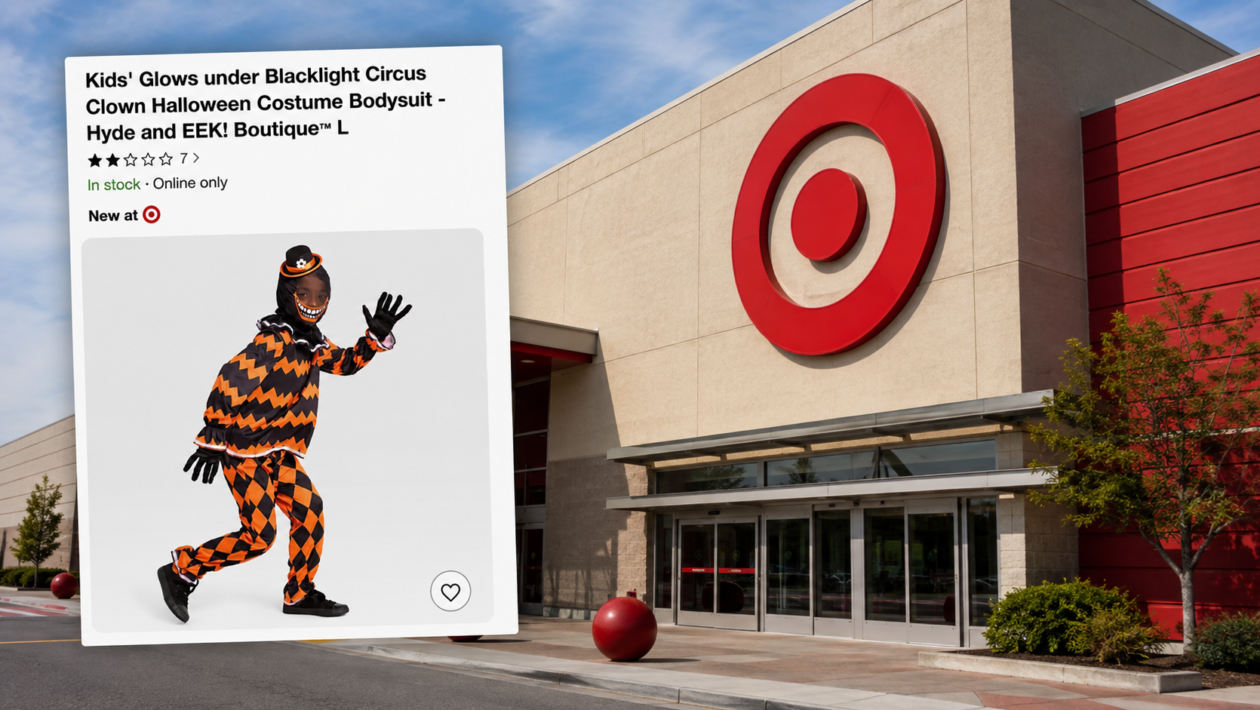
Target has removed a children’s Halloween clown costume from sale and issued a public apology after the design sparked widespread criticism from people who said it evoked racist Blackface imagery and historic minstrel-show caricatures.
The controversy erupted after images of the costume began circulating online, drawing criticism from consumers who questioned how the product made it through Target’s review and approval process.
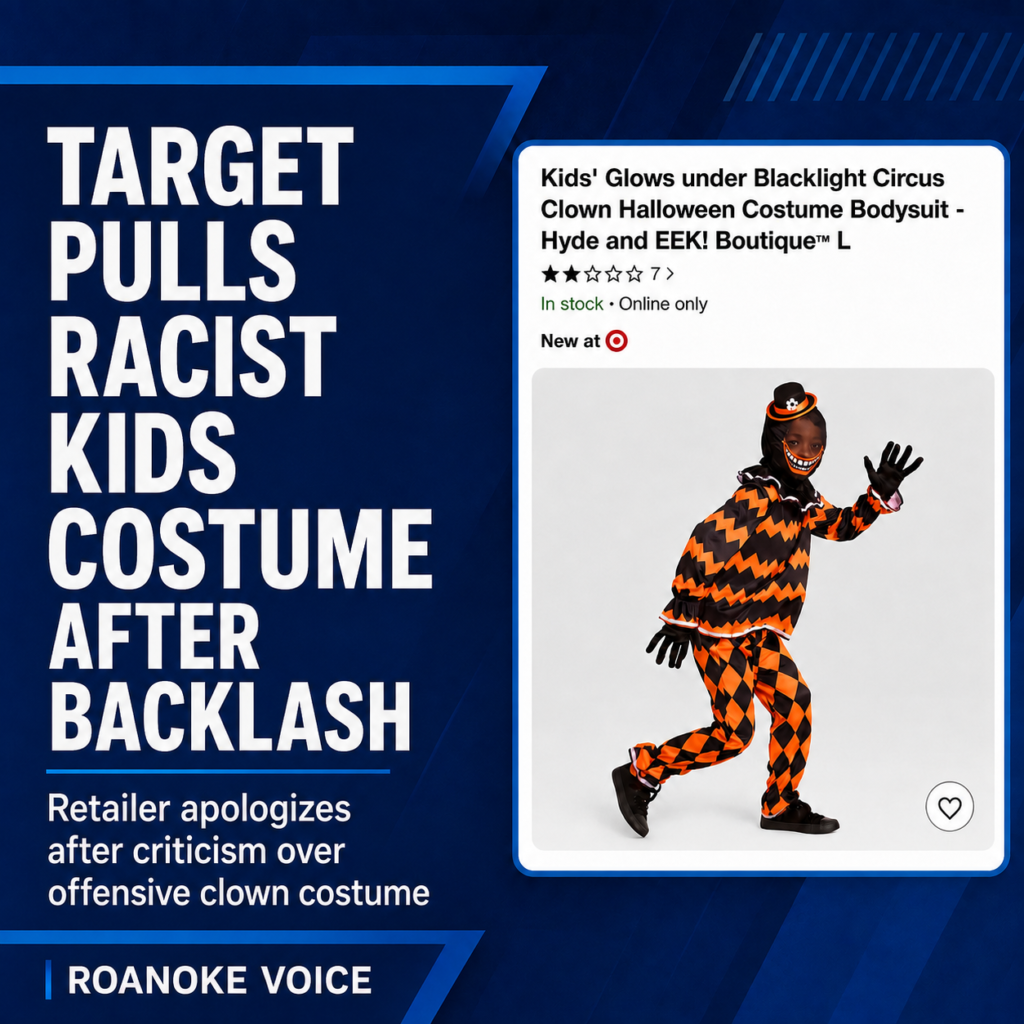
The item was listed as the “Kids’ Glows Under Blacklight Circus Clown Halloween Costume” and was sold under Target’s seasonal Hyde and EEK! Boutique brand.
Photos from the product listing showed a child modeling a black-and-orange circus clown outfit with black gloves, a small top hat and a large exaggerated smiling mouth incorporated into the costume.
Some social media users said those elements appeared uncomfortably similar to imagery associated with Blackface performances and minstrel shows — a form of entertainment with a long history of portraying Black Americans through degrading racial stereotypes.
Target: “We Got This Wrong”
Following the backlash, Target removed the costume from its website and apologized publicly.
“As a company, we know we got this wrong, and we are deeply sorry,” Target said in a statement Monday.
The retailer went further, saying the costume was “offensive and should never have been part of our assortment.”
Target confirmed that the item is no longer available for sale.
The company also acknowledged the specific impact the controversy has had on Black customers and employees, saying the costume was “especially hurtful for our Black guests, team members and partners.”
Target says it is now reviewing how the product was approved and what changes may be necessary to prevent a similar situation from happening again.
The company has not publicly identified who designed the costume or provided detailed information about the internal approval process that allowed it to reach Target’s online inventory.
Critics Question Target’s Internal Review Process
Beyond criticism of the costume itself, the incident has renewed questions about Target’s internal decision-making and diversity initiatives.
Some Black consumers and business leaders argued that the controversy demonstrates why having people from different backgrounds involved in product development, marketing and review can matter.
Minneapolis-area business leader Sheletta Brundidge was among those questioning whether changes Target previously made to its diversity, equity and inclusion programs may have affected the company’s ability to recognize potential problems before the costume reached customers.
Her concern centered on a simple question: who was in the room when the product was reviewed, and why did no one stop it?
Target announced changes to several diversity initiatives in 2025 amid broader corporate shifts involving DEI policies across the United States.
There is no evidence establishing that those changes directly caused the Halloween costume controversy, but critics have pointed to the incident as part of a larger discussion about representation and corporate decision-making.
A Sensitive History Behind the Backlash
The criticism surrounding the costume is tied to the history of Blackface and minstrel entertainment in the United States.
Beginning largely in the 19th century, White performers commonly darkened their faces and performed exaggerated portrayals of Black people. These performances frequently relied on demeaning stereotypes involving facial features, speech, behavior and intelligence.
Minstrel imagery remained common in American entertainment for decades before becoming widely recognized as racist and offensive.
Because of that history, modern products, advertisements and costumes that appear to reproduce exaggerated visual elements associated with those performances can quickly generate controversy.
In Target’s case, critics focused particularly on the costume’s dark facial covering and highly exaggerated white smile.
The company ultimately agreed that the product should not have been sold.
Another Public Relations Challenge for Target
The controversy comes as Target has been working to strengthen its brand and improve its retail performance.
The company has faced several politically and culturally charged disputes in recent years.
In 2023, Target drew national attention over its Pride-themed merchandise after receiving criticism from both conservative activists and LGBTQ+ advocates over how the company handled the situation.
Target later faced another wave of criticism after announcing changes to its diversity, equity and inclusion programs.
Those controversies have placed the retailer in a difficult position as it attempts to appeal to a broad customer base while competing with major retailers such as Walmart, Costco and Amazon.
The Halloween costume situation represents another unwanted public relations problem for the company at a time when Target has been attempting to improve consumer perception and regain momentum.
Costume Removed From Sale
The costume was part of Target’s Hyde and EEK! Boutique Halloween collection.
Products sold under the Target-owned seasonal brand have also appeared through third-party sellers and other online marketplaces in the past.
However, Reuters reported that the specific costume involved in this controversy could not be found for sale on Walmart, Amazon or Etsy when those sites were checked.
A Walmart spokesperson reportedly said the company had no knowledge of the item being sold through Walmart.
Target has not said how long the costume had been available before it was removed or how many units had been sold.
Target Says Changes May Be Coming
Target says its review of the incident is continuing.
“We are looking closely at how this happened and what needs to change,” the company said.
Exactly what those changes could include remains unclear.
The controversy raises broader questions facing large retailers that introduce thousands of new products every year: Who reviews those items before they reach customers, and what safeguards should companies have in place to identify potentially offensive imagery before a product goes on sale?
For Target, the company’s response has been clear on at least one point — officials acknowledge that this costume should never have reached customers in the first place.
What Do You Think?
Was Target right to immediately remove the costume and apologize?
Or do you believe the criticism surrounding the costume went too far?
Join the conversation and let us know what you think.
Reporting information for this story was compiled from Target’s public statement and reporting by Reuters.
Roanoke Voice — Local News. Real Impact.